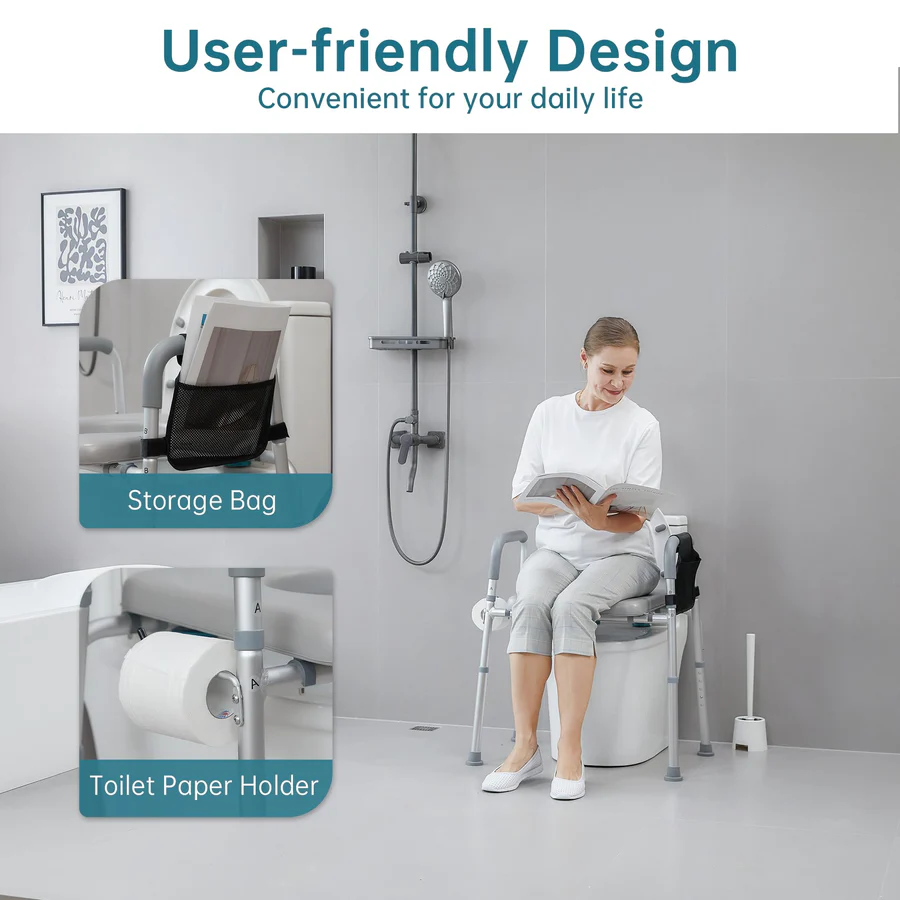
If you’ve ever groaned while getting up from a low toilet—or felt your knees pop like popcorn when you tried to sit—you’re not alone. For folks dealing with knee pain, hip issues, recovering from surgery, or just getting older, that daily squat down to the toilet and push back up can be surprisingly rough. That’s where a raised toilet seat comes in. It might not be glamorous, but it can make your life a whole lot easier.
So the question is: Can a raised toilet seat actually reduce strain on your knees or hips? Short answer? Yes, absolutely. But let’s talk about why.
Why Sitting Low Is a Problem
Standard toilets are usually around 14 to 16 inches high from the floor to the seat. That’s fine if you’ve got flexible joints and strong legs. But if your knees creak with every step, or your hips feel tight and stiff, dropping that low can feel like doing deep squats at the gym — every time you go to the bathroom.
That deep bend puts pressure on the joints, especially your:
- Knees: They have to bend more than 90 degrees and support your full body weight.
- Hips: They have to rotate and stabilize you as you lower down or get up.
- Thigh muscles: They do a lot of the heavy lifting, literally.
If you’re already sore or stiff, that motion can make things worse. And if you’re post-op or have limited mobility, it can be downright risky.
What a Raised Toilet Seat Actually Does
A raised toilet seat adds height to your toilet — usually anywhere from 2 to 6 inches. That might not sound like a lot, but it makes a huge difference in how far you have to bend to sit. Less bending = less joint pressure.
Here’s what that means for your body:
- Your knees don’t have to bend as deeply to get to the seat.
- Your hips stay at a more natural angle, which reduces tension.
- You use less effort standing back up, since you’re not pushing from such a low position.
Basically, it takes your toilet from a low squat to more of a casual sit.
What Changes with a Raised Seat?
If you’ve got arthritis, old sports injuries, or just age-related knee stiffness, you know that stairs, low chairs, and, yes, toilets, can be rough. A raised toilet seat helps by:
- Reducing the load on your quads and knee joints as you lower and lift.
- Making transitions smoother, so you’re not rocking back and forth trying to build momentum to stand up.
- Minimizing pain spikes from deep flexion.
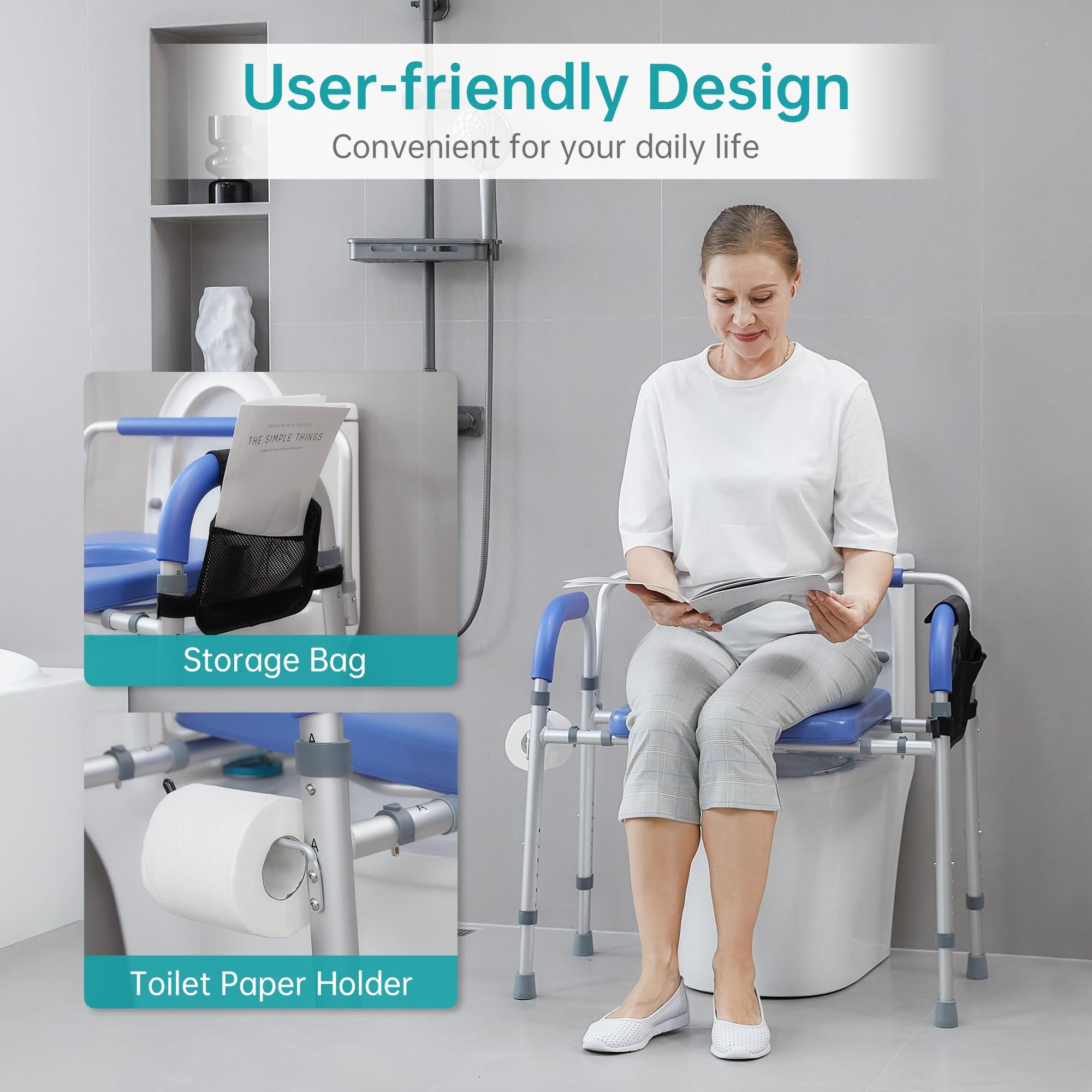
Plus, if you get a model with armrests or handles, that’s even better — your arms can help lift you, taking more pressure off your knees.
Why Height Matters
Hip pain is another big reason people switch to raised toilet seats. Whether it’s from a recent hip replacement, arthritis, or chronic pain, the motion of bending your hip past 90 degrees can be uncomfortable—or even unsafe.
Raising the seat means:
- You don’t have to flex your hips as far.
- The motion becomes more of a gentle sit-down, not a balancing act.
- There’s less torque on your hip joints, which can help prevent flare-ups.
For folks who’ve just had surgery (like a hip replacement), doctors often recommend a raised toilet seat during recovery for exactly this reason.
Safety and Independence
Let’s be real — nobody wants to feel like they need help using the toilet. Raised seats help people maintain independence. When it hurts less and takes less effort to sit and stand, you’re more likely to handle it on your own.
Plus, the safety factor is real. Less strain means you’re less likely to lose your balance, overreach, or put weight on the wrong joint. That can mean fewer falls, fewer injuries, and a lot more peace of mind.
Types of Raised Toilet Seats to Consider
If you’re thinking about getting one, here are a few common types:
- Clip-on seats: Easy to attach and remove. Great for short-term use (like after surgery).
- Bolted-on models: More stable, semi-permanent. Good for long-term or daily use.
- Raised seats with arms: Provide extra support when standing up or sitting down.
- Commode-style frames: These fit over your toilet like a small frame, with handrails and often padded seats.

They all raise the seat height, but the right one depends on your needs, budget, and how much support you want.
How High Should You Go?
Most people do well with a 3 to 4-inch boost. That’s enough to take the pressure off without making you feel like you’re on a throne in the clouds.
That said:
- If you’re tall or have really limited mobility, a 5 or 6-inch option might feel better.
- If you’re on the shorter side, anything over 4 inches might feel awkward or make your feet dangle.
Best bet? Measure the height of your toilet, then aim for a total height (toilet + raised seat) that lets you sit with your knees just slightly below your hips.
If going to the bathroom is starting to feel like a workout, or if your knees and hips protest every time you sit down, a raised toilet seat can make a huge difference. It’s simple, low-cost, and surprisingly effective.
You don’t need a fancy remodel or expensive gadget. Just a little extra height between you and the porcelain makes a daily task safer, easier, and way more comfortable.
And really, isn’t that what it’s all about?
Whether you’re dealing with joint pain, healing from surgery, or just making life easier as you age, a raised toilet seat is a small change that your knees and hips will thank you for — every single day.
